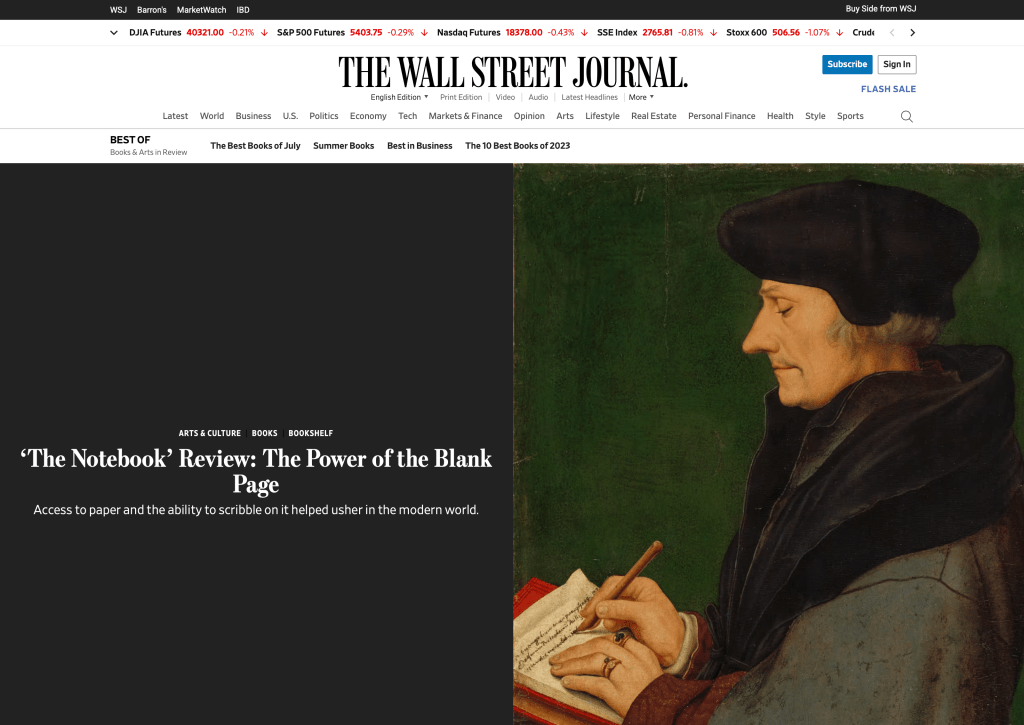
Getting a review like the WaPo’s is one of the nicest feelings in the world. It starts thus:
Even casual students of art history know that something big happened in Europe late in the 13th century. In paintings, the human form bloomed from its stilted late medieval shape, acquiring softness and dimension and elements of realism. This shift marked the beginnings of the cultural flowering that became the Renaissance, its earliest exponent the artist Cimabue. Why him, and why then?
In a bold and thrilling argument, Roland Allen asserts that Renaissance painting began with Cimabue (and his student Giotto) because he was one of the first artists in Christian Europe to have access to paper. Growing up in the 1250s, he had the ability to draw from life—to experiment with lines and proportions and shading before committing to his final materials and composition. “Wandering around the Tuscan countryside with a merchant’s ledger and an ink bottle, young Cimabue invented the sketchbook,” writes Mr. Allen in “The Notebook,” an adventurous and wide-ranging history of “thinking on paper.”
You can see the rest of the review here, and if that moves you to read the whole thing, please head down to your nearest bookstore or indeed over to bookshop.org.
Thanks so much to Meghan Cox Gurdon for reading the book with such an open mind!


 Roland-Allen.com
Leave a reply to Eric Wayte Cancel reply